Prompt New Trending – 5 Stunning AI Photo Ideas for Gemini
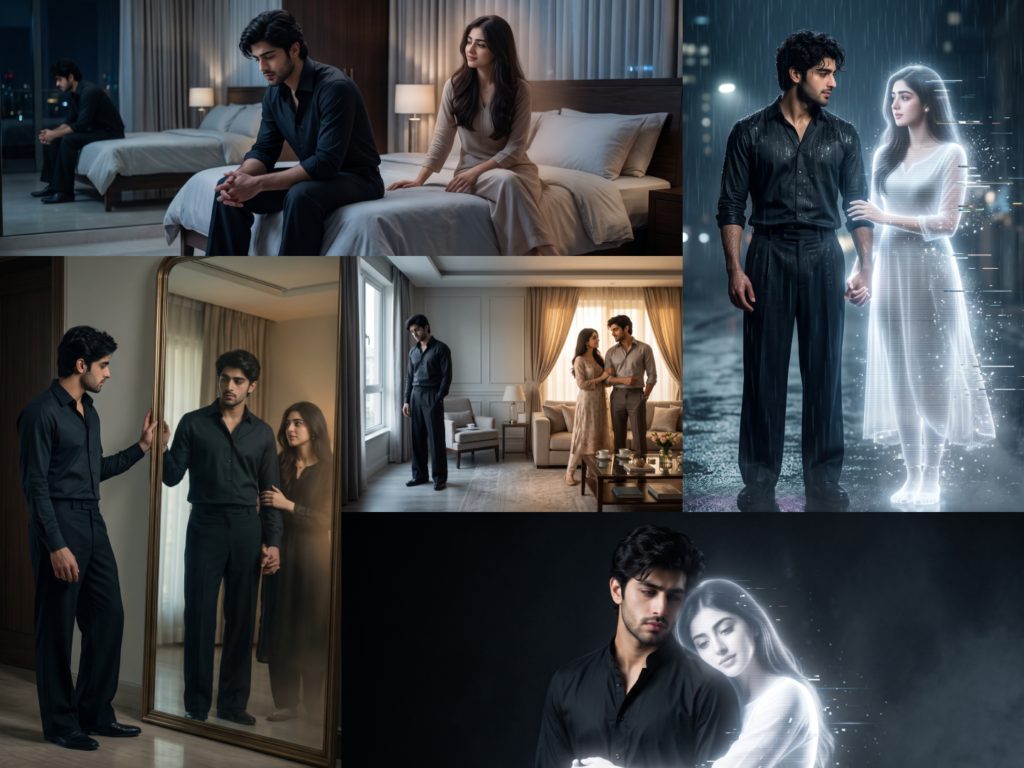
Table of Contents
Prompt New Trending
Looking for a prompt new trending idea to create something different from ordinary AI portraits? These five creative concepts combine emotional storytelling, surreal photography, futuristic visual effects, and cinematic realism to produce eye-catching AI-generated images.
AI photography trends are moving beyond simple outfit changes and background replacements. Modern creative prompts can turn an ordinary portrait into an emotional visual story by introducing reflections, holograms, alternate realities, imaginary characters, weather effects, and dreamlike environments.
This collection features five unique concepts: Holographic Lost Embrace, Mirror Imagination, The Imaginary Companion, Split Reality — Present vs. Dream, and Holographic Rain Memory.
Each concept creates a completely different visual experience. Some focus on emotional memories, while others explore dreams, relationships, futuristic technology, or the contrast between reality and imagination.
The Holographic Lost Embrace concept uses a glowing holographic figure to represent someone who is no longer physically present. Mirror Imagination explores the idea of a reflection showing a completely different version of reality. The Imaginary Companion introduces a mysterious companion who exists only within the subject’s imagination.
Meanwhile, Split Reality — Present vs. Dream divides the image into two contrasting worlds, while Holographic Rain Memory combines rain, glowing holographic elements, and emotional storytelling.
These prompt new trending ideas are especially useful when you want your AI images to feel more artistic, cinematic, and memorable instead of looking like standard generated portraits.
Trending Prompt New AI Photo Styles
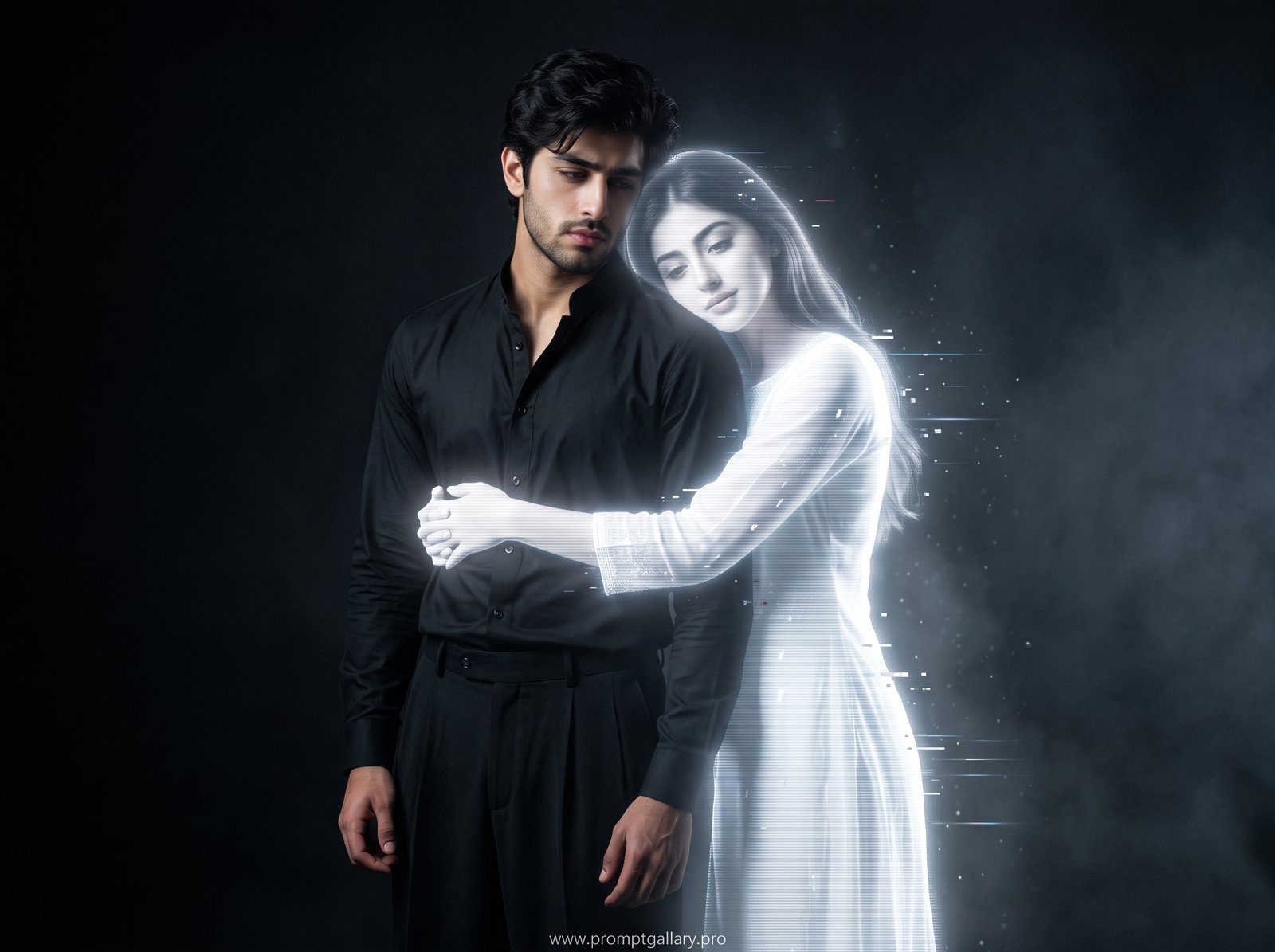
Prompt New Trending Holographic Lost Embrace
The Holographic Lost Embrace concept creates an emotional cinematic photograph centered around memory and separation. The main subject stands in a dark atmospheric environment while a translucent holographic figure appears nearby, creating the visual impression of someone remembered but physically absent.
The holographic figure can appear partially transparent with subtle glowing edges, soft particles, and realistic light interaction. The subject can reach toward the hologram or share an emotional embrace, creating a powerful visual story.
A dark background, atmospheric haze, subtle blue or violet illumination, and cinematic contrast can strengthen the futuristic appearance. The holographic effect should remain realistic rather than looking like a simple digital overlay.
You can customize the clothing, environment, holographic appearance, pose, facial expression, lighting, particles, and camera angle to create different emotional versions.
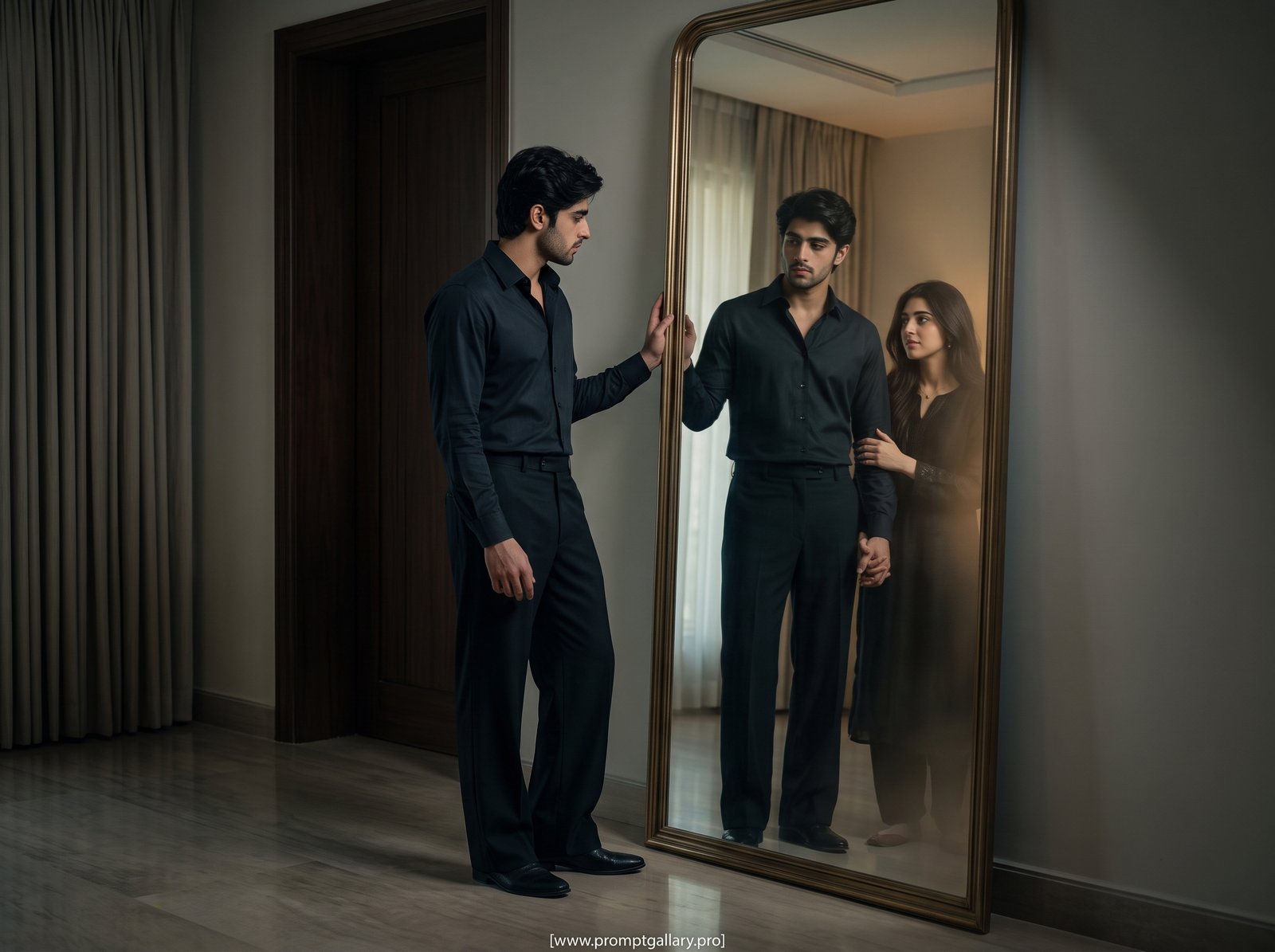
Prompt New Trending Mirror Imagination
The Mirror Imagination concept creates a surreal photograph where the subject looks into a mirror but the reflection shows something completely different from reality.
For example, the real subject can appear calm and naturally dressed while the mirror reflection presents a more powerful, glamorous, futuristic, or dreamlike version of the same person. The mirror becomes the visual connection between reality and imagination.
The composition should clearly distinguish the real person from the reflection while keeping the mirror perspective believable. Accurate reflection geometry, matching lighting, realistic facial identity, and natural positioning are important for making the effect convincing.
You can customize what the reflection represents, including a dream career, alternate fashion style, futuristic version, emotional state, or imaginary environment.
Prompt New Trending The Imaginary Companion
The Imaginary Companion concept tells a mysterious visual story by placing an unusual companion beside the main subject. The companion can appear almost real while subtle visual clues suggest that it exists only within the subject’s imagination.
The subject might walk beside the companion, sit together, have a conversation, or simply look toward it. The surrounding environment can remain realistic while the companion contains subtle surreal characteristics.
Soft atmospheric lighting, cinematic depth of field, realistic textures, and controlled visual effects can make the scene feel like a frame from a high-budget fantasy film.
You can customize the companion’s appearance, clothing, age, visual characteristics, environment, relationship with the subject, and emotional mood.
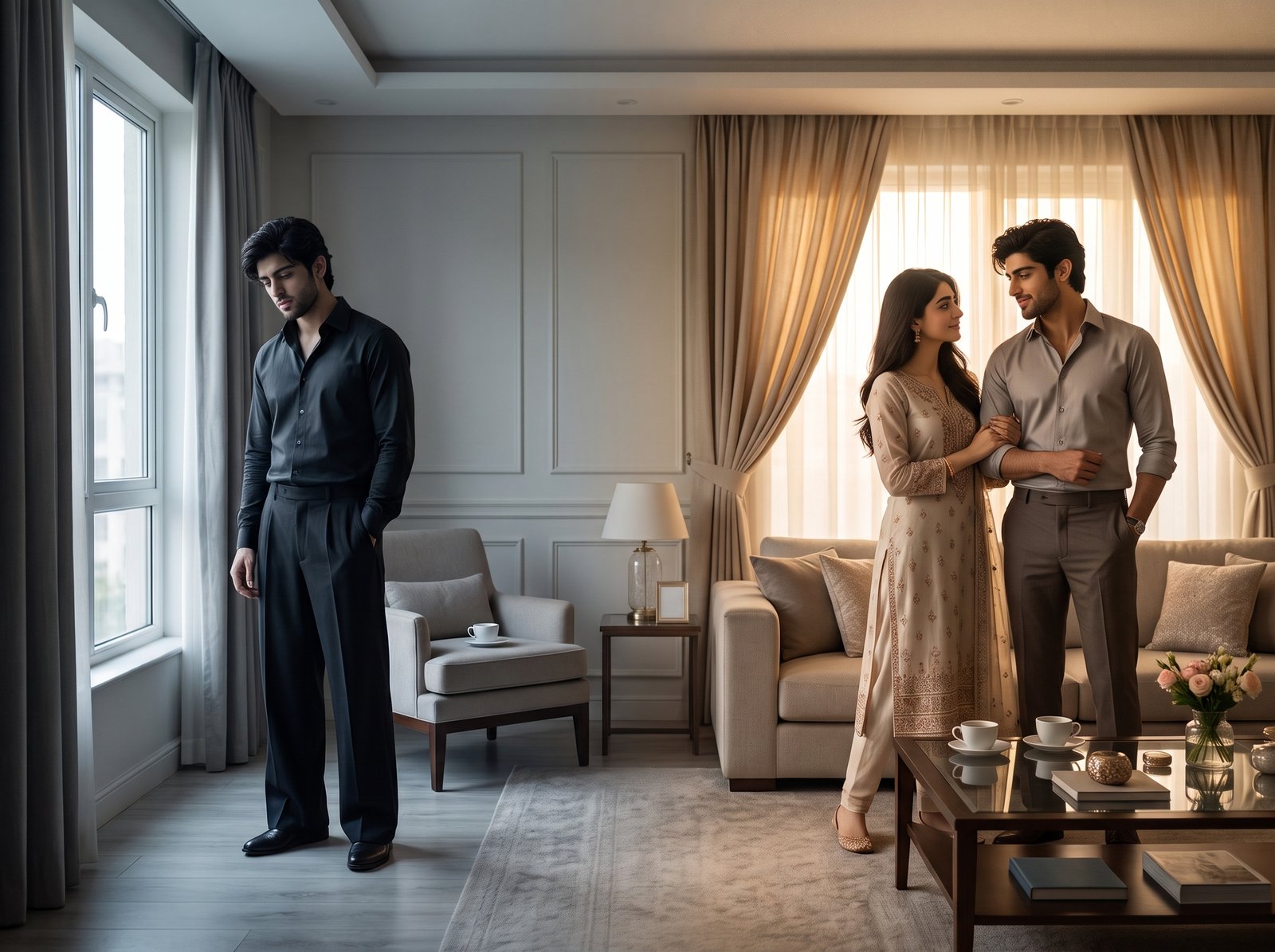
Prompt New Trending Split Reality — Present vs. Dream
The Split Reality — Present vs. Dream concept divides one photograph into two connected visual worlds. One side represents the subject’s current reality, while the other side represents a dream, ambition, memory, or imagined future.
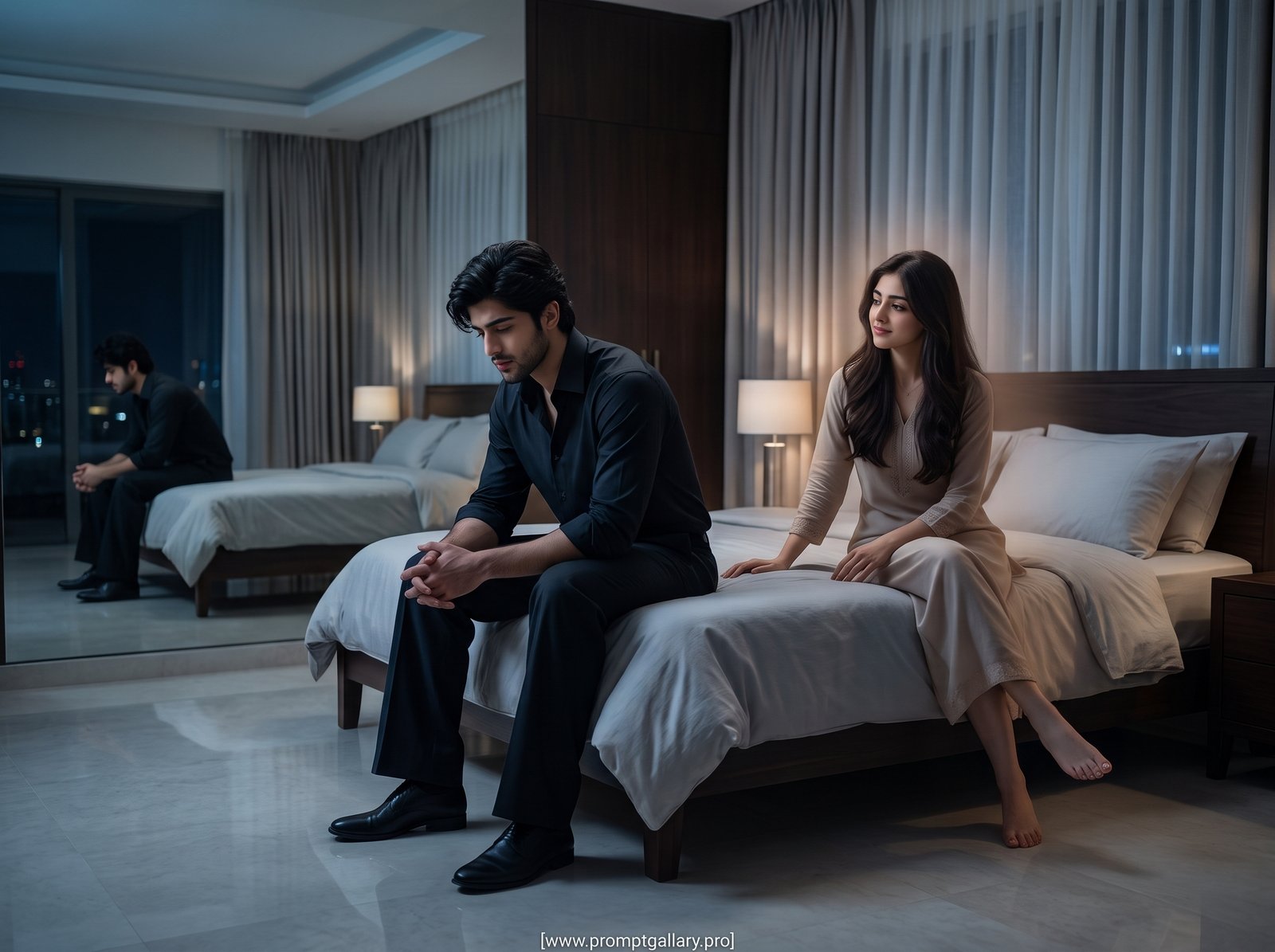
The two environments can contrast dramatically while still maintaining visual continuity. For example, one side can be a dark ordinary room while the other side becomes a luxurious futuristic environment.
The subject can appear in both realities with consistent facial identity while their clothing, surroundings, lighting, and emotional expression change according to each world.
A strong central transition between the two environments can make the concept especially eye-catching. You can customize the present-day environment, dream world, outfits, lighting, color mood, poses, and visual transition.
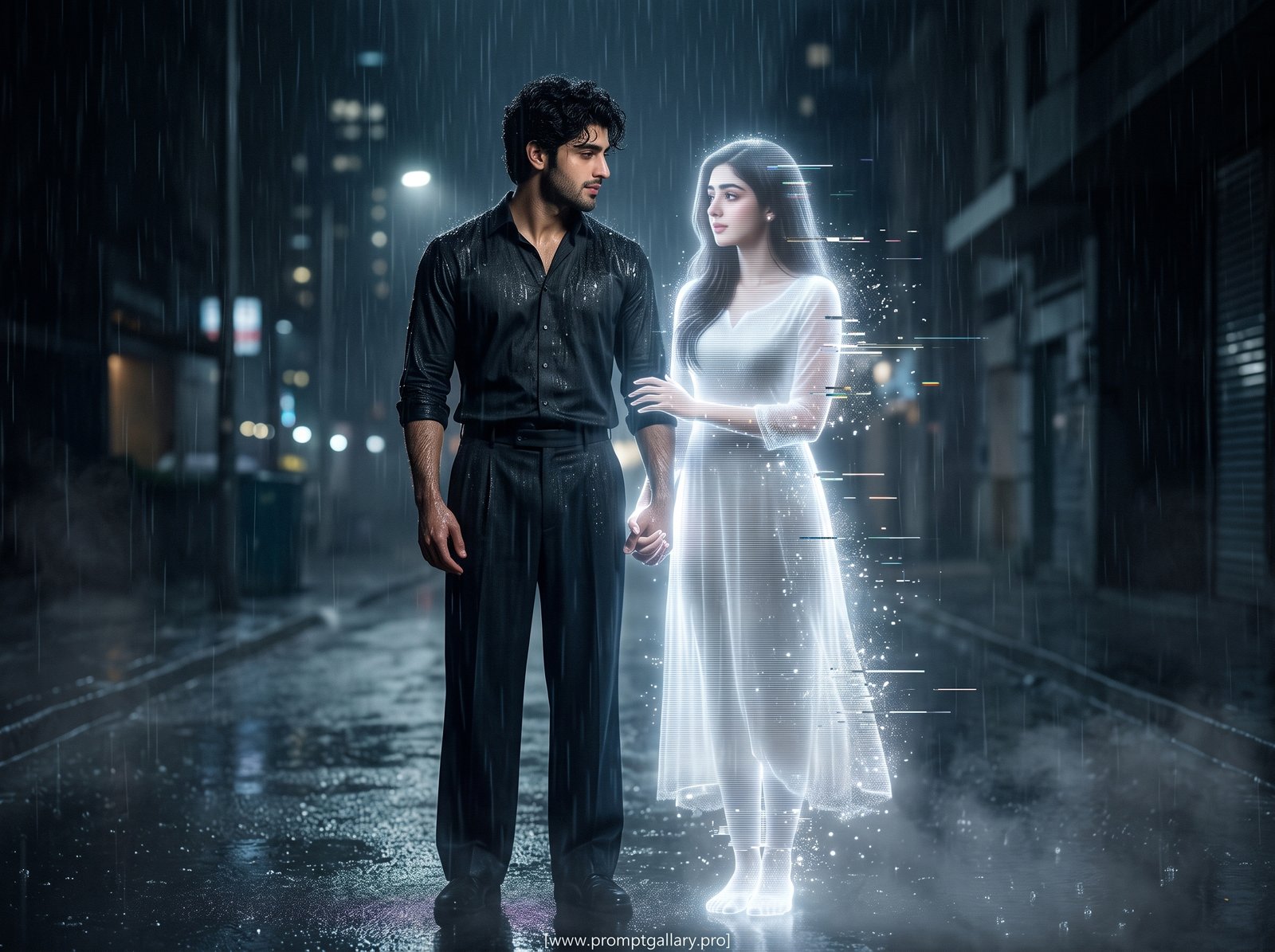
Prompt New Trending Holographic Rain Memory
The Holographic Rain Memory concept combines emotional portrait photography with futuristic rain effects. The subject stands outdoors in heavy rain while glowing holographic memories or fragments appear within the falling raindrops.
Some holographic elements can appear as faint silhouettes, photographs, glowing scenes, or abstract memories surrounding the subject. The effect should remain integrated with the environment rather than looking artificially pasted onto the photograph.
Wet clothing, realistic water droplets, reflective streets, atmospheric fog, cinematic backlighting, and shallow depth of field can make the image feel highly realistic.
You can customize the memory elements, rain intensity, location, clothing, lighting, holographic colors, camera perspective, and emotional expression.
Create Personalized Prompt New Trending Images with AI
One of the most exciting aspects of prompt new trending concepts is that they can be personalized around your own reference image. Instead of generating a completely random person, you can use a suitable reference photograph to guide the subject’s recognizable appearance while changing the visual story around them.
For the best results, use a clear reference image where the face is visible and well illuminated. Avoid excessive blur, extreme shadows, or obstructions across important facial features.
You can instruct the AI to preserve the subject’s recognizable facial structure, facial features, hairstyle, skin tone, eye shape, body proportions, and overall identity while transforming the environment.
The futuristic effects should complement the subject rather than overpowering the portrait. Holograms, reflections, rain, glowing particles, and alternate realities should interact naturally with the lighting and surroundings.
You can also customize the emotional direction. A lost embrace can communicate longing, a mirror can represent ambition, an imaginary companion can suggest loneliness or friendship, a split reality can represent dreams, and holographic rain can represent memories.
Camera composition is another important element. A medium portrait can emphasize facial emotion, a wider frame can reveal the environment, and a cinematic full-body composition can make the surreal effects more dramatic.
For professional results, request realistic skin texture, natural hands, believable proportions, accurate reflections, physically consistent lighting, detailed fabrics, realistic environmental shadows, cinematic depth of field, and high-resolution photographic detail.
How to Create This Image
- Choose your favorite concept:
- Holographic Lost Embrace
- Mirror Imagination
- The Imaginary Companion
- Split Reality — Present vs. Dream
- Holographic Rain Memory
- Click the Copy Prompt button below your preferred concept.
- Open your preferred AI image generator that supports reference images.
- Upload a clear reference photograph of your subject.
- Paste the copied prompt into the AI image generator.
- Instruct the AI to preserve the subject’s recognizable facial identity and overall appearance.
- Customize the outfit, location, pose, expression, lighting, camera angle, and visual effects if desired.
- Generate the image and carefully inspect the face, hands, body proportions, reflections, holographic elements, and environmental details.
- If the surreal effect looks artificial, refine the prompt by requesting more realistic integration between the effect and the environment.
- Experiment with different compositions, lighting conditions, and emotional moods.
- Save the strongest result for social media, creative projects, profile images, or AI photography inspiration.
Why Use Prompt New Trending AI Photo Ideas?
The biggest advantage of prompt new trending concepts is that they offer something beyond conventional AI portraits. Instead of simply changing clothing or backgrounds, these ideas introduce a visual narrative that encourages viewers to stop and examine the image.
Holographic Lost Embrace works particularly well for emotional and futuristic storytelling. Mirror Imagination is ideal for visually surprising compositions where reality and imagination meet.
The Imaginary Companion can create mysterious and emotional scenes, while Split Reality — Present vs. Dream provides a powerful way to represent two contrasting worlds inside one photograph.
Holographic Rain Memory combines weather, futuristic effects, and emotional storytelling to create a dramatic cinematic image.
Another benefit is flexibility. You can change the subject, clothing, environment, emotional theme, holographic appearance, lighting, camera angle, and composition while keeping the central concept intact.
These ideas can also be adapted for different visual aesthetics. You can make them dark and mysterious, bright and futuristic, romantic and emotional, luxurious and editorial, or cinematic and dramatic.
For creators who want their AI images to stand out on social media, unique concepts can be more memorable than generic portrait prompts. A strong visual idea combined with realistic photography details can create images that immediately communicate a story.
Whether you want to visualize a lost connection, explore an alternate version of yourself, create an imaginary relationship, compare reality with a dream, or represent memories through holographic rain, these five prompt new trending concepts provide a creative starting point for generating extraordinary AI photographs.
Frequently Asked Questions
What does “prompt new trending” mean?
It refers to creative and currently popular-style AI image prompt concepts designed to produce visually unique and attention-grabbing images rather than ordinary portraits.
Can I use my own photo with these prompts?
Yes. If your chosen AI image generator supports reference images, you can upload a suitable photo and instruct the AI to preserve the subject’s recognizable appearance.
Can I change the holographic effects?
Absolutely. You can customize the hologram’s appearance, transparency, glow, particles, shape, position, and interaction with the surrounding environment.
Can I change what appears in the mirror?
Yes. The mirror reflection can represent a dream, alternate identity, future version, different outfit, different environment, or another imaginative concept.
Can I make the Split Reality concept about my own dream?
Yes. You can describe your real-life environment on one side and your dream or imagined future on the other side.
Can I make the images photorealistic?
Yes. Include instructions for realistic skin texture, natural proportions, detailed fabrics, physically accurate lighting, realistic shadows, cinematic depth of field, and professional photography quality.
Which concept is best for emotional images?
Holographic Lost Embrace and Holographic Rain Memory are particularly effective for emotional and cinematic storytelling.
Which concept is best for a creative social media post?
Mirror Imagination and Split Reality — Present vs. Dream can create visually surprising compositions that are well suited to attention-grabbing social media content.
Can I change the mood of these concepts?
Yes. You can make the scene romantic, mysterious, emotional, futuristic, dramatic, luxurious, dreamy, or dark by changing the lighting, environment, colors, expressions, and atmosphere.
Can I create multiple versions of the same concept?
Yes. Try different outfits, environments, poses, camera angles, lighting conditions, and visual effects to create several unique versions from the same core idea.
Prompts