Submit a request
Home / Couple Prompts / Prompt New Trending – 5 Stunning AI Photo Ideas for Gemini
Prompt New Trending – 5 Stunning AI Photo Ideas for Gemini

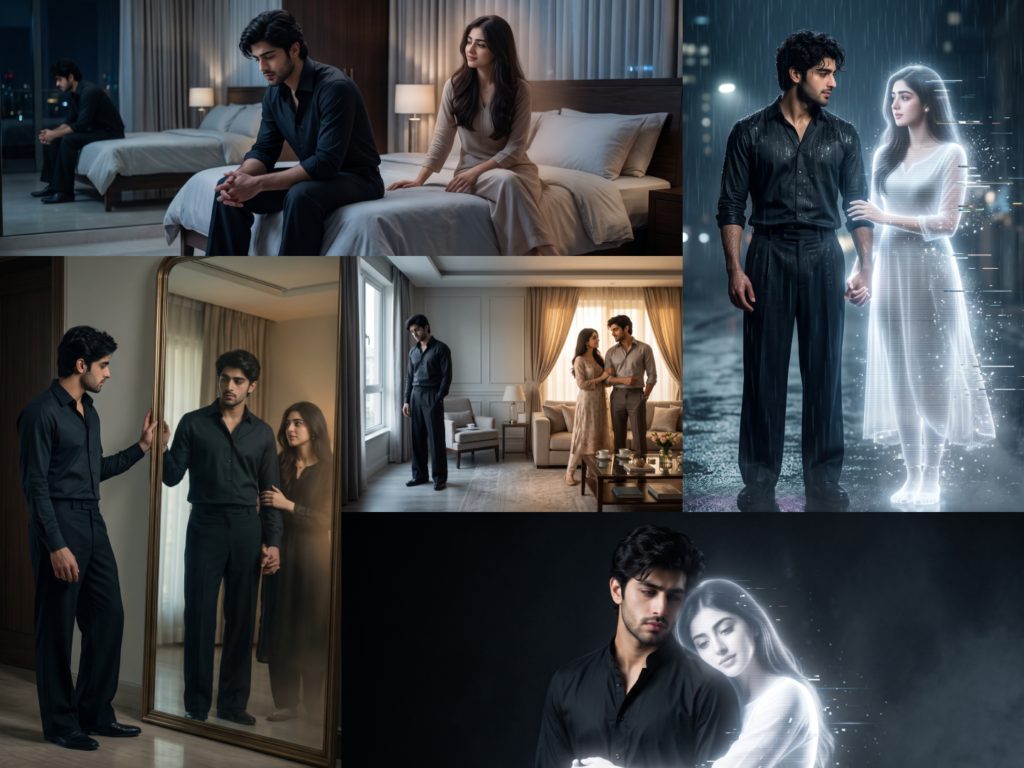
Looking for a prompt new trending idea to create something different from ordinary AI portraits? These five creative concepts combine emotional storytelling, surreal photography, futuristic visual effects, and cinematic realism to produce eye-catching AI-generated images.

AI photography trends are moving beyond simple outfit changes and background replacements. Modern creative prompts can turn an ordinary portrait into an emotional visual story by introducing reflections, holograms, alternate realities, imaginary characters, weather effects, and dreamlike environments.

This collection features five unique concepts: Holographic Lost Embrace, Mirror Imagination, The Imaginary Companion, Split Reality — Present vs. Dream, and Holographic Rain Memory.

Each concept creates a completely different visual experience. Some focus on emotional memories, while others explore dreams, relationships, futuristic technology, or the contrast between reality and imagination.

The Holographic Lost Embrace concept uses a glowing holographic figure to represent someone who is no longer physically present. Mirror Imagination explores the idea of a reflection showing a completely different version of reality. The Imaginary Companion introduces a mysterious companion who exists only within the subject’s imagination.

Meanwhile, Split Reality — Present vs. Dream divides the image into two contrasting worlds, while Holographic Rain Memory combines rain, glowing holographic elements, and emotional storytelling.

These prompt new trending ideas are especially useful when you want your AI images to feel more artistic, cinematic, and memorable instead of looking like standard generated portraits.

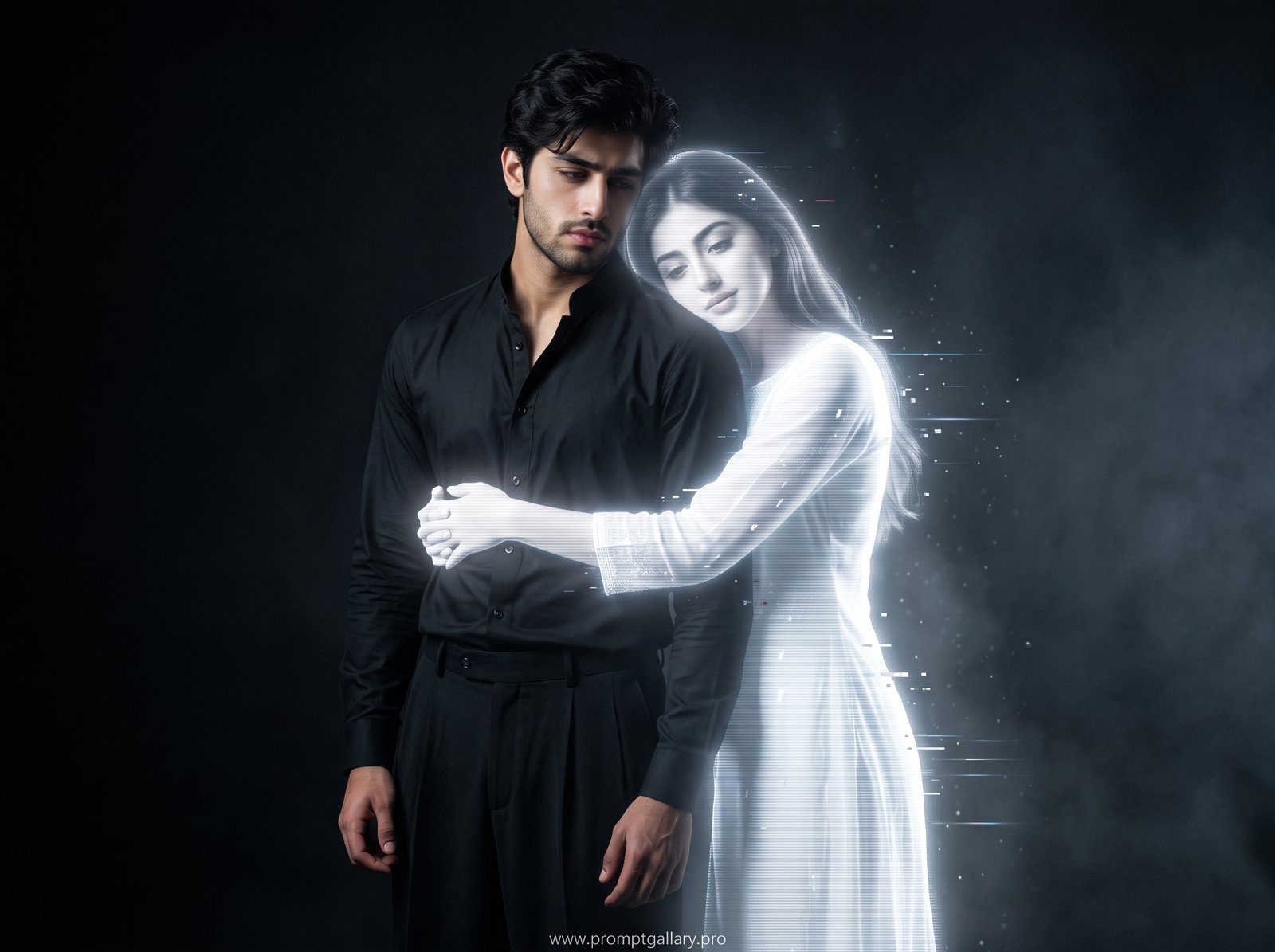
The Holographic Lost Embrace concept creates an emotional cinematic photograph centered around memory and separation. The main subject stands in a dark atmospheric environment while a translucent holographic figure appears nearby, creating the visual impression of someone remembered but physically absent.

The holographic figure can appear partially transparent with subtle glowing edges, soft particles, and realistic light interaction. The subject can reach toward the hologram or share an emotional embrace, creating a powerful visual story.

A dark background, atmospheric haze, subtle blue or violet illumination, and cinematic contrast can strengthen the futuristic appearance. The holographic effect should remain realistic rather than looking like a simple digital overlay.

You can customize the clothing, environment, holographic appearance, pose, facial expression, lighting, particles, and camera angle to create different emotional versions.

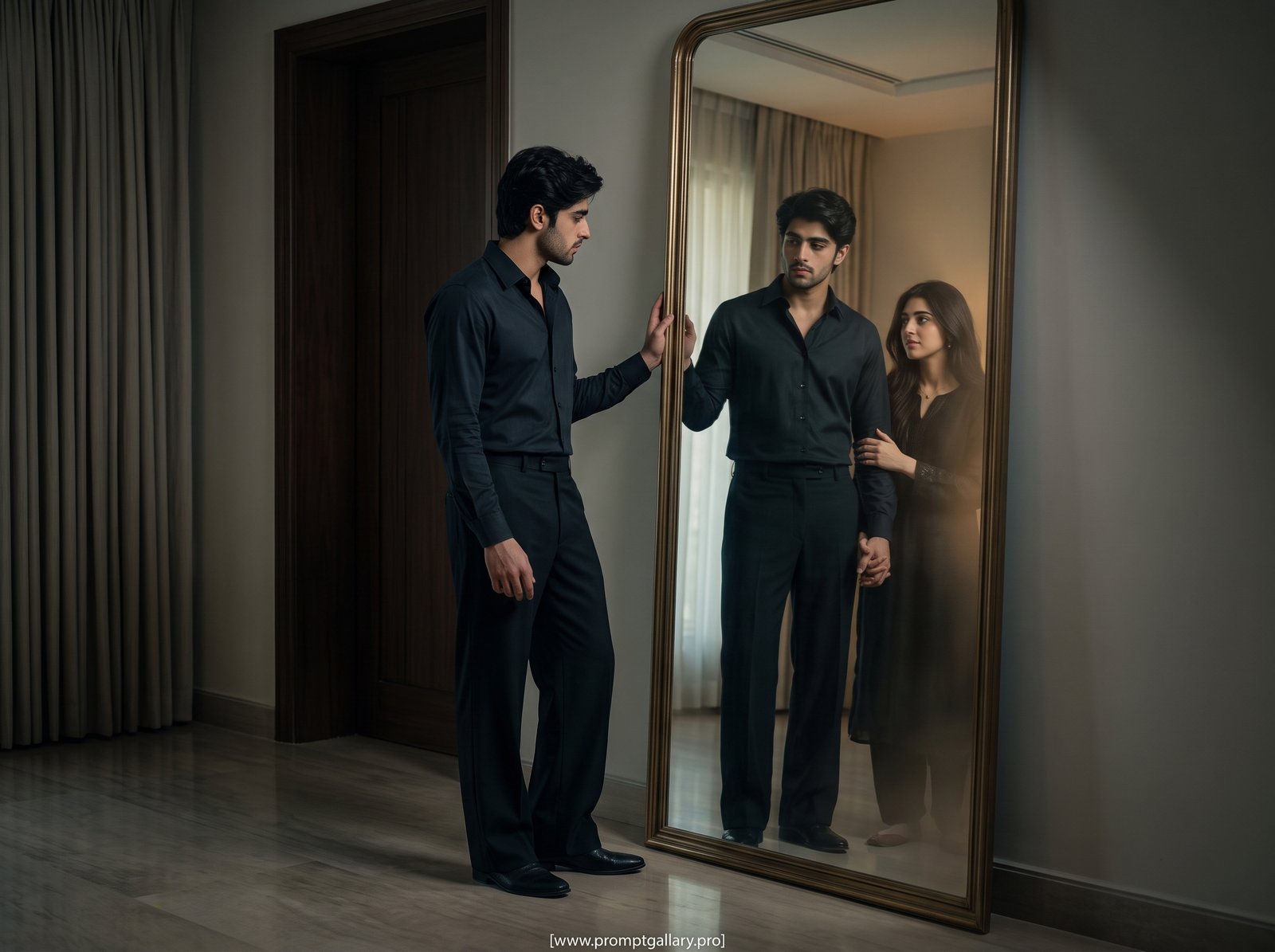
The Mirror Imagination concept creates a surreal photograph where the subject looks into a mirror but the reflection shows something completely different from reality.

For example, the real subject can appear calm and naturally dressed while the mirror reflection presents a more powerful, glamorous, futuristic, or dreamlike version of the same person. The mirror becomes the visual connection between reality and imagination.

The composition should clearly distinguish the real person from the reflection while keeping the mirror perspective believable. Accurate reflection geometry, matching lighting, realistic facial identity, and natural positioning are important for making the effect convincing.

You can customize what the reflection represents, including a dream career, alternate fashion style, futuristic version, emotional state, or imaginary environment.

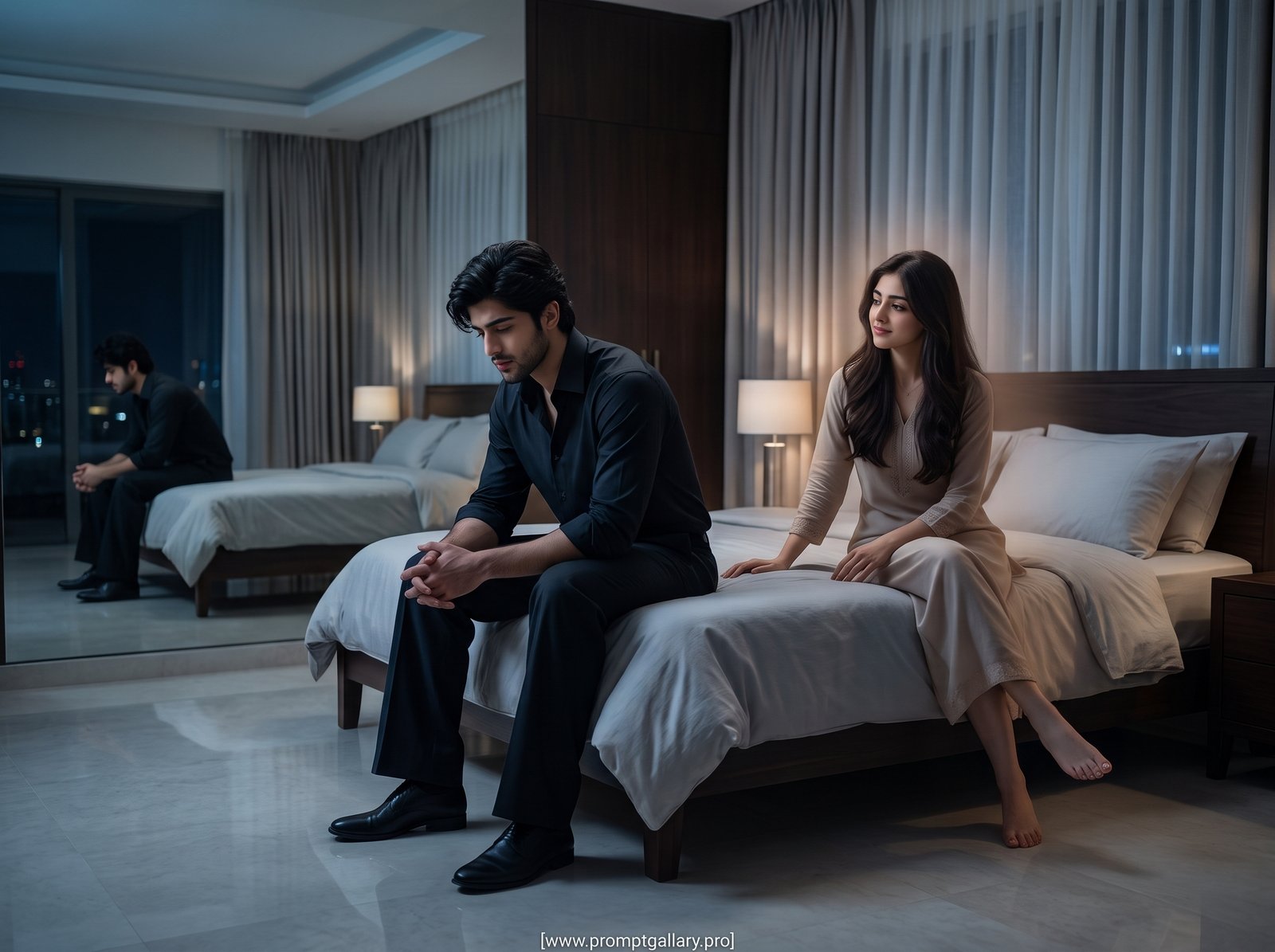
The Imaginary Companion concept tells a mysterious visual story by placing an unusual companion beside the main subject. The companion can appear almost real while subtle visual clues suggest that it exists only within the subject’s imagination.

The subject might walk beside the companion, sit together, have a conversation, or simply look toward it. The surrounding environment can remain realistic while the companion contains subtle surreal characteristics.

Soft atmospheric lighting, cinematic depth of field, realistic textures, and controlled visual effects can make the scene feel like a frame from a high-budget fantasy film.

You can customize the companion’s appearance, clothing, age, visual characteristics, environment, relationship with the subject, and emotional mood.

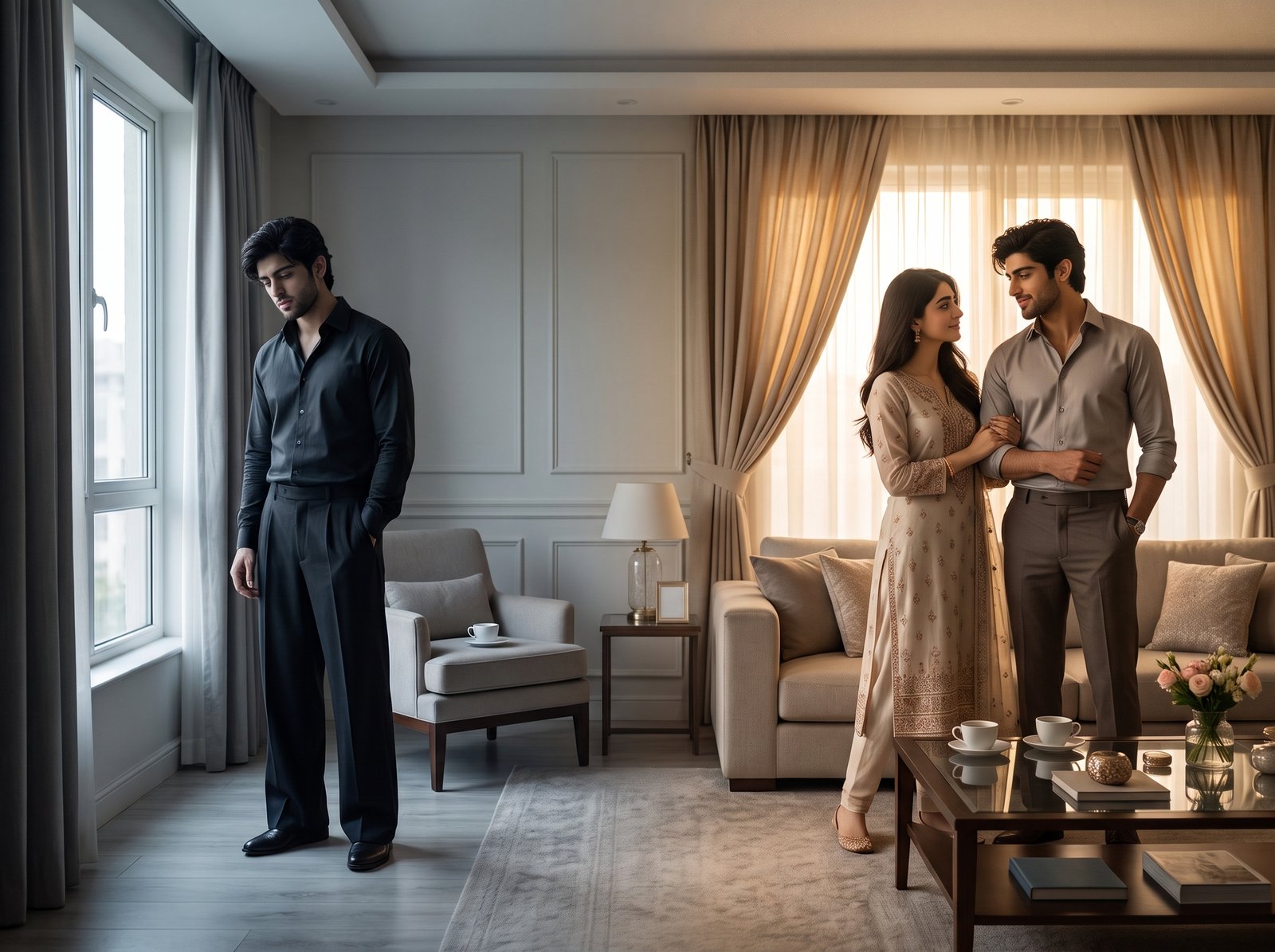
The Split Reality — Present vs. Dream concept divides one photograph into two connected visual worlds. One side represents the subject’s current reality, while the other side represents a dream, ambition, memory, or imagined future.

The two environments can contrast dramatically while still maintaining visual continuity. For example, one side can be a dark ordinary room while the other side becomes a luxurious futuristic environment.

The subject can appear in both realities with consistent facial identity while their clothing, surroundings, lighting, and emotional expression change according to each world.

A strong central transition between the two environments can make the concept especially eye-catching. You can customize the present-day environment, dream world, outfits, lighting, color mood, poses, and visual transition.

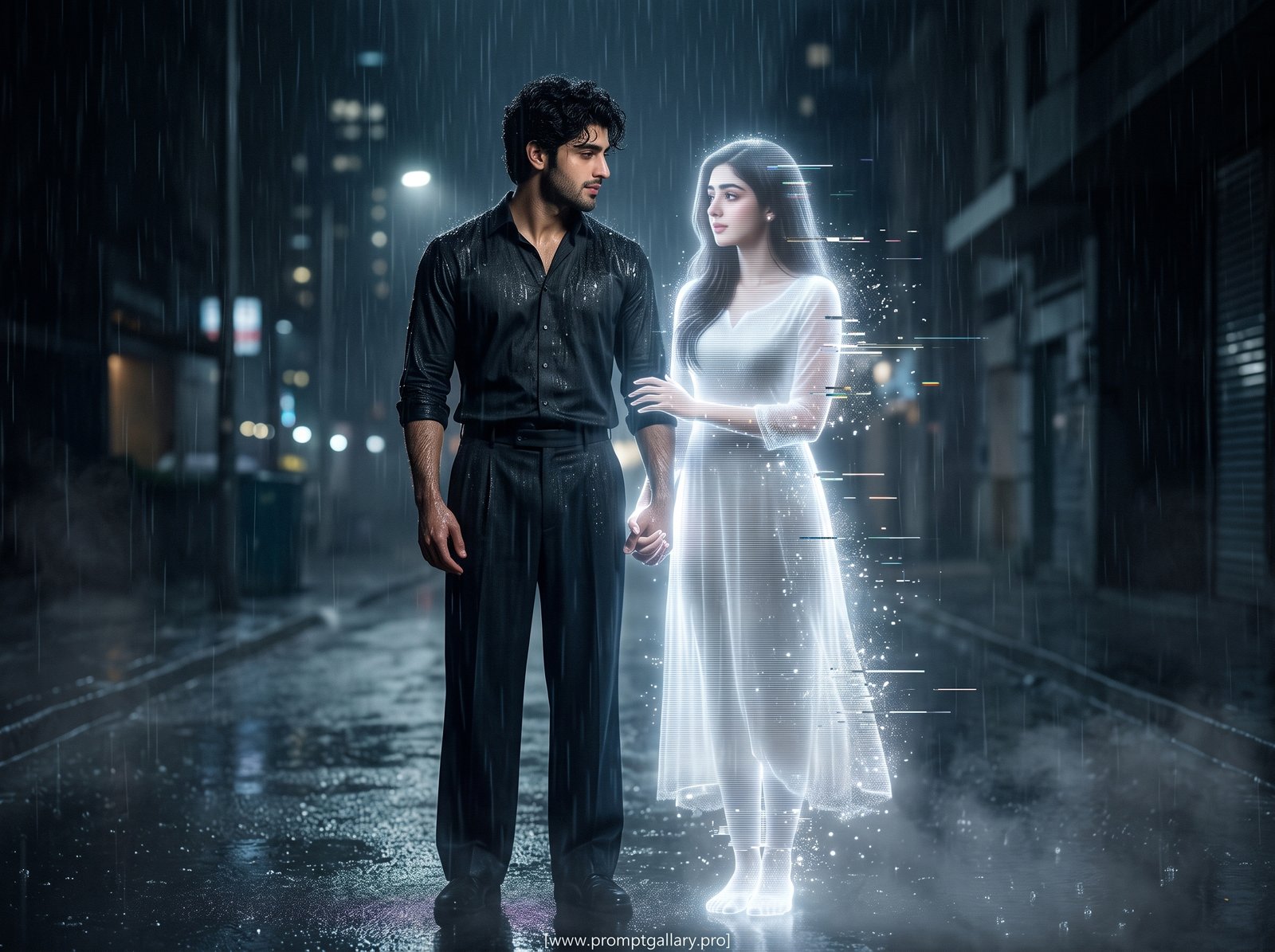
The Holographic Rain Memory concept combines emotional portrait photography with futuristic rain effects. The subject stands outdoors in heavy rain while glowing holographic memories or fragments appear within the falling raindrops.

Some holographic elements can appear as faint silhouettes, photographs, glowing scenes, or abstract memories surrounding the subject. The effect should remain integrated with the environment rather than looking artificially pasted onto the photograph.

Wet clothing, realistic water droplets, reflective streets, atmospheric fog, cinematic backlighting, and shallow depth of field can make the image feel highly realistic.

You can customize the memory elements, rain intensity, location, clothing, lighting, holographic colors, camera perspective, and emotional expression.

One of the most exciting aspects of prompt new trending concepts is that they can be personalized around your own reference image. Instead of generating a completely random person, you can use a suitable reference photograph to guide the subject’s recognizable appearance while changing the visual story around them.

For the best results, use a clear reference image where the face is visible and well illuminated. Avoid excessive blur, extreme shadows, or obstructions across important facial features.

You can instruct the AI to preserve the subject’s recognizable facial structure, facial features, hairstyle, skin tone, eye shape, body proportions, and overall identity while transforming the environment.

The futuristic effects should complement the subject rather than overpowering the portrait. Holograms, reflections, rain, glowing particles, and alternate realities should interact naturally with the lighting and surroundings.

You can also customize the emotional direction. A lost embrace can communicate longing, a mirror can represent ambition, an imaginary companion can suggest loneliness or friendship, a split reality can represent dreams, and holographic rain can represent memories.

Camera composition is another important element. A medium portrait can emphasize facial emotion, a wider frame can reveal the environment, and a cinematic full-body composition can make the surreal effects more dramatic.

For professional results, request realistic skin texture, natural hands, believable proportions, accurate reflections, physically consistent lighting, detailed fabrics, realistic environmental shadows, cinematic depth of field, and high-resolution photographic detail.

How to Create This Image

  1. Choose your favorite concept:
    • Holographic Lost Embrace
    • Mirror Imagination
    • The Imaginary Companion
    • Split Reality — Present vs. Dream
    • Holographic Rain Memory
  2. Click the Copy Prompt button below your preferred concept.
  3. Open your preferred AI image generator that supports reference images.
  4. Upload a clear reference photograph of your subject.
  5. Paste the copied prompt into the AI image generator.
  6. Instruct the AI to preserve the subject’s recognizable facial identity and overall appearance.
  7. Customize the outfit, location, pose, expression, lighting, camera angle, and visual effects if desired.
  8. Generate the image and carefully inspect the face, hands, body proportions, reflections, holographic elements, and environmental details.
  9. If the surreal effect looks artificial, refine the prompt by requesting more realistic integration between the effect and the environment.
  10. Experiment with different compositions, lighting conditions, and emotional moods.
  11. Save the strongest result for social media, creative projects, profile images, or AI photography inspiration.

The biggest advantage of prompt new trending concepts is that they offer something beyond conventional AI portraits. Instead of simply changing clothing or backgrounds, these ideas introduce a visual narrative that encourages viewers to stop and examine the image.

Holographic Lost Embrace works particularly well for emotional and futuristic storytelling. Mirror Imagination is ideal for visually surprising compositions where reality and imagination meet.

The Imaginary Companion can create mysterious and emotional scenes, while Split Reality — Present vs. Dream provides a powerful way to represent two contrasting worlds inside one photograph.

Holographic Rain Memory combines weather, futuristic effects, and emotional storytelling to create a dramatic cinematic image.

Another benefit is flexibility. You can change the subject, clothing, environment, emotional theme, holographic appearance, lighting, camera angle, and composition while keeping the central concept intact.

These ideas can also be adapted for different visual aesthetics. You can make them dark and mysterious, bright and futuristic, romantic and emotional, luxurious and editorial, or cinematic and dramatic.

For creators who want their AI images to stand out on social media, unique concepts can be more memorable than generic portrait prompts. A strong visual idea combined with realistic photography details can create images that immediately communicate a story.

Whether you want to visualize a lost connection, explore an alternate version of yourself, create an imaginary relationship, compare reality with a dream, or represent memories through holographic rain, these five prompt new trending concepts provide a creative starting point for generating extraordinary AI photographs.

Frequently Asked Questions

It refers to creative and currently popular-style AI image prompt concepts designed to produce visually unique and attention-grabbing images rather than ordinary portraits.

Can I use my own photo with these prompts?

Yes. If your chosen AI image generator supports reference images, you can upload a suitable photo and instruct the AI to preserve the subject’s recognizable appearance.

Can I change the holographic effects?

Absolutely. You can customize the hologram’s appearance, transparency, glow, particles, shape, position, and interaction with the surrounding environment.

Can I change what appears in the mirror?

Yes. The mirror reflection can represent a dream, alternate identity, future version, different outfit, different environment, or another imaginative concept.

Can I make the Split Reality concept about my own dream?

Yes. You can describe your real-life environment on one side and your dream or imagined future on the other side.

Can I make the images photorealistic?

Yes. Include instructions for realistic skin texture, natural proportions, detailed fabrics, physically accurate lighting, realistic shadows, cinematic depth of field, and professional photography quality.

Which concept is best for emotional images?

Holographic Lost Embrace and Holographic Rain Memory are particularly effective for emotional and cinematic storytelling.

Which concept is best for a creative social media post?

Mirror Imagination and Split Reality — Present vs. Dream can create visually surprising compositions that are well suited to attention-grabbing social media content.

Can I change the mood of these concepts?

Yes. You can make the scene romantic, mysterious, emotional, futuristic, dramatic, luxurious, dreamy, or dark by changing the lighting, environment, colors, expressions, and atmosphere.

Can I create multiple versions of the same concept?

Yes. Try different outfits, environments, poses, camera angles, lighting conditions, and visual effects to create several unique versions from the same core idea.

Prompts
Sample result 1
prompt new trending Holographic Lost Embrace
Use the first reference image as the identity of the man and the second reference image as the identity of the woman. Preserve both identities accurately and consistently, including facial structure, facial features, skin tone, hairstyle, eye shape, body proportions, and overall recognizable appearance. Create a cinematic, deeply emotional 4:3 vertical photograph set in a dark, moody atmospheric environment. The man stands slightly toward the left side of the frame, wearing a sophisticated dark button-up shirt with wide-leg trousers. His posture is quiet and emotionally heavy, with a subtle downward gaze and a melancholic expression. His body and clothing remain completely realistic, sharply detailed, and naturally lit. Beside him, recreate the woman from the second reference image as a beautiful translucent holographic apparition. Her face must remain clearly recognizable as the same woman from the reference image, while her entire body is transformed into an ethereal luminous hologram made of intense soft white light. Her edges should appear semi-transparent and subtly dissolving into the surrounding darkness. The holographic woman is physically and naturally hugging the man from the side, wrapping both arms gently around him in an intimate emotional embrace. Her head rests naturally near his shoulder or upper chest, creating the feeling that she is comforting him or representing a lost memory. The man's body reacts naturally to the embrace, with realistic posture, anatomy, and subtle emotional tension. Their arms, hands, shoulders, and body positions must connect naturally with no anatomical distortions or floating limbs. Give the woman's holographic body a sophisticated futuristic glitch treatment: distinct horizontal scanlines, fine digital interference, subtle fragmented pixels, delicate light streaks, and controlled translucent distortion flowing across her silhouette. The glitch effect must remain primarily confined to the woman's holographic body and must NOT distort the man's face or body. Create a powerful visual contrast between the realistic dark-clothed man and the intensely glowing white holographic woman. Her luminous light should softly illuminate the man's face, shoulders, and clothing, producing realistic white rim lighting and subtle reflected light on his body. Add volumetric light particles and faint atmospheric haze around the hologram. Dark cinematic background, minimal environmental distractions, deep shadows, high contrast, dramatic negative space, subtle fog, realistic skin and fabric textures, photorealistic anatomy, premium cinematic photography, emotional storytelling, sophisticated sci-fi realism, melancholic romantic atmosphere. Camera: full-body to three-quarter composition, eye-level perspective, cinematic framing, 85mm portrait lens aesthetic, shallow depth of field, realistic depth separation, HDR detail, soft cinematic bokeh, controlled highlights, natural shadows, subtle film grain, professional color grading. The final image should feel like a scene from a high-budget emotional science-fiction film — realistic rather than fantasy illustration, elegant rather than overly futuristic, haunting, intimate, and visually powerful. Place a small, clean, elegant white watermark reading exactly: "[www.promptgallary.pro](http://www.promptgallary.pro)" at the bottom center of the image. The watermark should be clearly readable but subtle, with no other text, logos, captions, or typography anywhere in the image. Aspect ratio: 4:3 vertical.
Sample result 2
prompt new trending Mirror Imagination
Use the first reference image as the identity of the man and the second reference image as the identity of the woman. Preserve both identities accurately and consistently, including facial structure, facial features, skin tone, hairstyle, eye shape, body proportions, and overall recognizable appearance. Create a highly cinematic, emotional 4:3 horizontal photograph of a young man standing alone inside a sophisticated, dimly lit room in front of a large vintage floor-to-ceiling mirror. The real-world scene must contain ONLY the man. He stands naturally in front of the mirror, wearing an elegant dark button-up shirt and wide-leg trousers. His posture is slightly relaxed and introspective, with one hand resting naturally near his side while the other lightly touches the edge of the mirror. His expression is quiet and melancholic as he looks into the mirror, as though remembering someone deeply important to him. The mirror must accurately reflect the man's position, clothing, posture, and environment. However, inside the mirror reflection, create a subtle surreal emotional reality: the woman from the second reference image appears standing beside the man's reflection. The woman must look completely realistic and clearly recognizable as the same woman from the reference image. She is NOT a hologram, NOT transparent, NOT glowing, and NOT affected by digital glitches. She should look like a real person naturally existing inside the imagined reflection. Inside the mirror, the imagined woman stands close beside the man's reflection and gently holds his hand. She looks toward him with a soft, emotional expression while he looks back at her. Their interaction should feel intimate, natural, and deeply personal. The crucial storytelling element is that the woman exists ONLY inside the mirror. Outside the mirror, the actual room contains only the man and an empty physical space beside him. The woman's presence should feel like the man's imagination or emotional memory coming alive within the reflection. Create a subtle visual distinction between reality and imagination without using holographic effects. The real-world environment should have cooler, subdued cinematic lighting, while the imagined world inside the mirror can have slightly warmer, softer and dreamlike illumination. The transition between the two realities should be extremely subtle and photorealistic rather than fantasy-like. The mirror reflection must be physically believable and spatially coherent. The man's reflected body must correspond correctly to his real-world position, while the imagined woman's placement should make visual sense within the mirror environment. Avoid the common AI mistake of placing the woman outside the mirror or creating multiple reflections. Set the scene inside an elegant minimalist interior with dark wooden details, subtle curtains, a polished floor, muted neutral walls, soft atmospheric shadows, and a few understated decorative elements. Keep the environment uncluttered so the emotional relationship between the man and his imagined reflection remains the primary focus. Composition: cinematic 4:3 horizontal framing, full-body to three-quarter view, large mirror occupying a significant portion of the frame, man positioned slightly off-center, imagined woman visible clearly inside the mirror, strong negative space, sophisticated editorial composition. Camera: professional cinematic photography, 50mm lens aesthetic, realistic perspective, moderate shallow depth of field, natural skin texture, detailed fabric, realistic mirror reflections, HDR detail, subtle film grain, soft cinematic bokeh, controlled highlights, deep shadows, premium cinematic color grading. Create a powerful emotional atmosphere of loneliness, longing, memory, and imagined companionship. The viewer should immediately understand that the man is physically alone, while the woman represents the person he wishes were actually there. Photorealistic, sophisticated, emotionally intense, cinematic realism, realistic anatomy, natural body language, authentic facial expressions, premium editorial photography. Strictly avoid holograms, glowing bodies, scanlines, glitch effects, transparent skin, fantasy effects, duplicated women, the woman appearing outside the mirror, incorrect reflections, distorted faces, malformed hands, extra fingers, duplicated limbs, unnatural anatomy, excessive surrealism, cartoon styling, illustration aesthetics, and cyberpunk elements. Place a small, clean, elegant white watermark reading exactly: "[www.promptgallary.pro](http://www.promptgallary.pro)" at the bottom center of the image. Keep it subtle but clearly readable. No other text, logos, captions, or typography anywhere in the image. Aspect ratio: 4:3 horizontal.
Sample result 3
prompt new trending The Imaginary Companion
Use the first reference image as the identity of the man and the second reference image as the identity of the woman. Preserve both identities accurately and consistently, including facial structure, facial features, skin tone, hairstyle, eye shape, body proportions, and overall recognizable appearance. Create a deeply emotional, photorealistic 4:3 cinematic photograph inside a quiet, elegant bedroom at night. The man sits alone on the edge of a neatly made bed, positioned slightly toward one side of the frame. He is wearing a sophisticated dark button-up shirt with relaxed wide-leg trousers. His posture is emotionally exhausted and introspective, with his elbows resting loosely on his knees and his hands gently clasped together. His head is slightly lowered, creating a powerful feeling of loneliness and contemplation. Beside him, on the other side of the bed, the woman from the second reference image appears completely realistic and natural. She is sitting sideways on the bed with her legs gently angled toward him, wearing an elegant, tasteful feminine outfit with sleeves. She looks at the man with a warm, quiet, affectionate expression, as though she is silently comforting him. One of her hands rests gently on the bed between them, while her other hand is relaxed near her lap. Do NOT make the woman a hologram. She must have completely realistic skin, natural lighting, realistic clothing texture, normal opacity, and authentic human anatomy. The emotional twist is that the woman exists only inside the man's imagination. Make this storytelling element subtle and sophisticated rather than obvious. The woman should look completely real at first glance, but introduce carefully controlled visual clues suggesting that she is not physically present. The bed beneath and around the woman should remain subtly undisturbed and slightly cooler in appearance, while the man's side shows realistic physical contact with the mattress. The woman should cast only an extremely subtle, almost imperceptible shadow. In a nearby wall mirror, show ONLY the man's real reflection and the empty portion of the bed beside him — the imagined woman must NOT appear in the mirror reflection. This mirror detail is essential: the real world contains only the man, while the woman exists solely in his imagination. Create a sophisticated contrast between reality and imagination using lighting rather than holographic effects. The man's physical environment uses soft cool nighttime illumination, while the imagined woman is surrounded by an extremely subtle warm, dreamy softness that blends naturally with the room. Do not use glow, transparency, digital particles, scanlines, glitches, or futuristic effects. The man should not look directly at the camera. His attention should remain focused downward or subtly toward the woman, while the woman looks at him with an intimate, compassionate expression. Their body language should communicate a relationship filled with history and longing without exaggerated romance. Environment: luxurious minimalist bedroom, dark wooden furniture, elegant bed linens, soft curtains, subtle bedside lamp, large wall mirror, faint city lights visible through a distant window, polished floor, quiet nighttime atmosphere, realistic shadows and reflections, minimal decorative elements. Composition: cinematic 4:3 horizontal framing, medium-wide full-body composition, both subjects clearly visible, man seated on the edge of the bed, woman seated beside him, generous negative space, strong visual storytelling, balanced composition. Camera: professional cinematic photography, 50mm lens aesthetic, realistic perspective, moderate shallow depth of field, natural skin texture, detailed fabric, realistic hair strands, HDR detail, subtle film grain, soft cinematic bokeh, controlled highlights, deep shadows, premium cinematic color grading. The final image should feel like an emotional scene from a high-budget romantic drama — quiet, intimate, melancholic, realistic, sophisticated, and psychologically intriguing. The viewer should initially believe the woman is actually there, then notice the mirror reflection and subtle environmental clues revealing that she is only the man's imagined companion. Strictly avoid: holographic effects, glowing bodies, transparency, digital glitches, scanlines, futuristic effects, duplicated women, woman appearing in the mirror, incorrect reflections, malformed hands, extra fingers, distorted faces, duplicated limbs, unnatural anatomy, exaggerated poses, cartoon styling, illustration aesthetics, excessive fantasy effects, text, logos, or additional characters. Place a small, clean, elegant white watermark reading exactly: "[www.promptgallary.pro](http://www.promptgallary.pro)" at the bottom center of the image. Keep it subtle but clearly readable. No other text, logos, captions, or typography anywhere in the image. Aspect ratio: 4:3 horizontal.
Sample result 4
prompt new trending Split Reality — Present vs. Dream
Use the first reference image as the identity of the man and the second reference image as the identity of the woman. Preserve both identities accurately and consistently, including facial structure, facial features, skin tone, hairstyle, eye shape, body proportions, and overall recognizable appearance. Create a highly cinematic, photorealistic 4:3 horizontal photograph that visually represents two different realities existing within the same location. The entire composition takes place inside the same elegant apartment living room, but the frame is naturally divided into two contrasting emotional realities through lighting, atmosphere, wardrobe, and subtle environmental transition. On the LEFT side of the frame is the man's PRESENT reality. The man stands completely alone inside a quiet, slightly empty living room. He wears a sophisticated dark button-up shirt and wide-leg dark trousers. His posture is tired and introspective, standing near a large window while looking downward with a lonely, emotionally distant expression. The room around him feels cold, muted, quiet, and slightly empty. Cool natural window light, subtle shadows, desaturated tones, minimal furniture, and negative space reinforce his loneliness. On the RIGHT side of the same frame is the man's IMAGINED reality — the life he wishes he could have. The woman from the second reference image appears completely realistic and naturally integrated into the same room. She wears an elegant premium feminine outfit with sleeves and stands close to the man as if they are sharing a peaceful moment together. In the imagined reality, the man appears more relaxed and emotionally alive. His wardrobe is subtly different and more refined, with a lighter sophisticated shirt and tailored trousers. The woman gently holds his arm while looking at him with a warm affectionate expression. The man looks back at her with a subtle genuine smile. Their body language should feel natural, intimate, and emotionally connected without exaggerated romance. The two realities must NOT look like two separate photographs placed side-by-side. They must exist within one continuous physical environment. The architecture, floor, walls, furniture, window placement, and perspective should align across both sides of the composition. Create a sophisticated cinematic transition between the realities near the CENTER of the frame. The transition should feel like reality is gradually transforming into memory: cold muted surroundings subtly evolve into warmer atmospheric lighting, empty furniture gradually becomes more lived-in, and small environmental details transition naturally from the present into the imagined world. Do NOT use holograms, digital glitches, scanlines, transparent bodies, futuristic effects, or obvious visual separators. The transition must be achieved through realistic cinematic lighting, environmental blending, depth, atmosphere, and carefully controlled composition. The LEFT side should communicate loneliness, silence, and emotional emptiness. The RIGHT side should communicate warmth, companionship, happiness, and the life he imagines. Create subtle visual storytelling details: on the present side, an untouched coffee cup, empty chair, closed curtains, and colder shadows. On the imagined side, two coffee cups, softer curtains moving slightly in warm light, subtle flowers or personal objects, and a more lived-in atmosphere. These details should blend naturally across the center rather than forming an artificial split. The man should appear as the same person across both realities, but with a subtly different emotional state and wardrobe appropriate to each reality. The imagined version should NOT look like a duplicate pasted into the frame; it must feel like a cinematic alternate reality. Composition: sophisticated 4:3 horizontal editorial framing, strong central visual transition, present reality on the left, imagined reality on the right, both realities clearly readable, balanced negative space, natural perspective, cinematic storytelling. Camera: professional cinematic photography, 50mm lens aesthetic, realistic perspective, moderate depth of field, highly detailed skin and clothing textures, HDR detail, realistic shadows, subtle film grain, soft cinematic bokeh, natural reflections, premium cinematic color grading. Lighting: cool subdued daylight and soft shadows on the present side; warm golden ambient illumination on the imagined side. The transition between the two lighting environments should be gradual and physically believable. The final image should feel like a frame from a high-budget psychological romantic drama — sophisticated, emotional, surreal in concept but completely photorealistic in execution. The viewer should instantly understand that the left side represents his lonely present while the right side represents the life he wishes he were living with her. Strictly avoid: holograms, glowing people, digital glitches, scanlines, transparency, cyberpunk aesthetics, fantasy effects, hard vertical dividing lines, collage borders, duplicated faces, duplicated bodies, malformed hands, extra fingers, distorted anatomy, unnatural poses, excessive romantic clichés, cartoon styling, illustration aesthetics, text, logos, or additional characters. Place a small, clean, elegant white watermark reading exactly: "[www.promptgallary.pro](http://www.promptgallary.pro)" at the bottom center of the image. Keep it subtle but clearly readable. No other text, logos, captions, or typography anywhere in the image. Aspect ratio: 4:3 horizontal.
Sample result 5
prompt new trending Holographic Rain Memory
Use the first reference image as the identity of the man and the second reference image as the identity of the woman. Preserve both identities accurately and consistently, including facial structure, facial features, skin tone, hairstyle, eye shape, body proportions, and overall recognizable appearance. Create a deeply emotional, cinematic 9:16 vertical photograph of a young man standing on a deserted urban street at night during heavy rainfall. The man stands slightly to the left of the composition, wearing a sophisticated dark button-up shirt and wide-leg dark trousers. His clothing appears naturally wet from the rain, with realistic water droplets and subtle fabric texture. Instead of hugging him from behind, the holographic woman stands directly beside him on his right side. She gently holds his hand with one of her hands, while her other hand rests softly near his forearm. Their arms and hands must connect naturally with anatomically correct fingers and realistic physical positioning. The man turns his head slightly toward the holographic woman and looks into her eyes with a quiet, emotional expression. The woman looks back at him with a soft, melancholic expression. Their eye contact should communicate love, separation, and the feeling of being together for one final moment. Transform the woman from the second reference image into a beautiful translucent holographic apparition while keeping her face clearly recognizable as the same woman from the reference image. Her body is constructed from luminous soft white light, subtle transparency, glowing edges, delicate particles, and realistic volumetric illumination. Her holographic body contains sophisticated horizontal scanlines, fine digital interference, subtle pixel fragmentation, thin glitch streaks, and sections of her silhouette gently dissolving into glowing particles. The glitch effect should be elegant and controlled, concentrated mainly around the woman's holographic body. Do not distort her face. Create a strong visual contrast between the realistic man and the glowing holographic woman. Her white light softly illuminates the man's face, hand, wet clothing, and hair. Their joined hands should become an important emotional focal point, with realistic reflected light and tiny rain droplets visible around them. Heavy rain falls throughout the scene. Individual raindrops catch the woman's holographic light. The wet pavement beneath them reflects both the dark silhouette of the man and the luminous figure of the woman. Add subtle puddles, atmospheric mist, floating holographic particles, and faint volumetric light. Background: dark cinematic urban street at night, distant out-of-focus lights, minimal architecture, deep shadows, subtle fog, realistic wet surfaces, atmospheric depth, no distracting objects. Composition: full-body cinematic portrait, man and holographic woman standing side-by-side, their hands connected in the center of the frame, faces turned toward each other, strong emotional storytelling, balanced negative space, elegant vertical composition. Camera: professional cinematic photography, 85mm lens aesthetic, shallow depth of field, realistic bokeh, HDR detail, photorealistic skin and fabric textures, realistic rain physics, natural reflections, subtle film grain, controlled highlights, deep shadows, premium cinematic color grading. The final image should feel like a frame from a high-budget emotional science-fiction romance film — intimate, haunting, melancholic, elegant, realistic, and emotionally powerful. Strictly avoid: back hugs, rear embraces, duplicated people, extra characters, malformed hands, extra fingers, floating limbs, disconnected hands, distorted faces, unrealistic anatomy, excessive neon, cartoon aesthetics, fantasy illustration style, heavy cyberpunk styling, text, logos, or additional typography. Place a small, clean, elegant white watermark reading exactly: "[www.promptgallary.pro](http://www.promptgallary.pro)" at the bottom center of the image. Keep it subtle but clearly readable. No other text anywhere in the image. Aspect ratio: 9:16 vertical.
Share

Arsal JG

Arsal is a Prompt Expert at Prompt Gallery, crafting detailed AI photo prompts for Gemini and ChatGPT that turn simple photos into stunning, professional-style portraits. Couple Prompts